40 australian food labels explained
Food labels - Better Health Channel The food label will tell you all sorts of information, including: what the food is manufacturer's details nutrition information ingredients weights and measures of product date marking directions for use and storage country of origin allergens and additives any nutrition and health claims. How to read a food label - Healthy Kids Choosing foods in the supermarket can be difficult, so here's a handy guide to help you make decisions.
10 Rules For Reading a Food Label - YouTube The basics for understanding a nutrition label are important for every person to know. This video presents clear rules to properly read a food label. This vi...

Australian food labels explained
Australian Pesticides and Veterinary Medicines Authority The Australian Pesticides and Veterinary Medicines Authority (APVMA) is the Australian Government regulator of agricultural and veterinary (agvet) chemical products. We acknowledge the traditional owners and custodians of country throughout Australia and acknowledge their continuing connection to land, sea and community. We pay our respects to ... ASSIST | Australian school science information support for … Australian School Science Information and Support For Teachers and Technicians. Recommended Resources / View All > Earth and Space Science - Year 9 W.A.S.P. 0. This online resource supports the teaching of Year 9 Earth and space science. Read more about Earth and Space Science - Year 9 W.A.S.P. Conservation of energy worksheet #2 5. This downloadable … Albanese government urged to act on vegan food labels | The … However, under pressure from plant-based food makers, it added an additional clause that meant that, provided additional context was added, labels …
Australian food labels explained. Food labels - NHS These labels provide information on the number of grams of fat, saturated fat, sugars and salt, and the amount of energy (in kJ and kcal) in a serving or portion of the food. But be aware that the manufacturer's idea of a portion may be different from yours. Some front-of-pack nutrition labels also provide information about reference intakes. Plain English Allergen Labelling (PEAL) and FoodWorks - Xyris Changes are coming for labelling allergens on your food products. After several years of consultation, on 25 February 2021 the Food Standards Code was updated with new requirements for labelling allergens in food. Before compliance with the Plain English Allergen Labelling (PEAL) requirements becomes mandatory, there is a 3-year transition period. Kilojoules | healthdirect You should be able to work out how many kilojoules are in foods you buy by looking at the food labels. By law, food labels must list the kilojoules in 100g (or 100mL) of a product and in some states and territories, certain food retailers are required to display the kilojoule content of their food and drinks at point of sale. Country of origin | ACCC Most of the foods you buy need to display country of origin labels. Look out for these labels on food packages or in-store signage. Different labelling requirements apply depending on: whether the food is grown, produced, made or packed in Australia or another country; whether the food is a ‘priority’ or ‘non-priority’ food
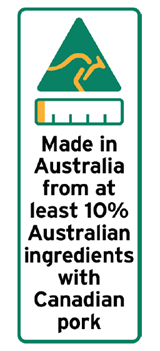
Country of origin labelling explained WHAT DO COUNTRY OF ORIGIN LABELS LOOK LIKE? A. Three-component standard mark Mandatory for priority food items (such as meat, fruit and vegetables, bread and dairy products) grown, produced or made in Australia. The label includes: The kangaroo in a triangle symbol. A bar chart showing the percentage of Australian ingredients. Organic claims | ACCC Organic products intended for the Australian market are not required to be certified in order to be labelled ‘organic’. However, there is a voluntary standard for growers and manufacturers wishing to label products as ‘organic’ and ‘biodynamic’ for sale within Australia (AS 6000–2015). Food labels explained | SA Health Food labels provide information to help us make healthier and safer food choices. They: tell us which nutrients, in what amounts, are in a product warn us if a food contains food allergens inform us if the food is fresh or out of date explain how to store, prepare or cook the food we buy list product ingredients Grocery unit prices | ACCC You should find unit prices on in-store shelf price labels and promotional signs, in online listings, and in newspaper and catalogue advertisements. Not all grocery items must be unit priced. See: Not all items carry unit prices. How to use unit pricing to save money. Comparing the unit prices of grocery items will help you get the best value ...
Nutrition information panels - Food Standards Nutrition information panels (NIP) on food labels provide information on the average quantity of energy in kilojoules or in kilojoules and kilocalories and these nutrients: protein fat saturated fat carbohydrate sugars sodium - a component of salt. A NIP will include information about other nutrients if a claim is made. How To Read Food and Beverage Labels - National Institute on Aging There are three types of product dates commonly printed on packaged foods and beverages: "Sell by" tells how long the manufacturer suggests that a store should sell items such as meat, poultry, eggs, or milk products. Make sure you buy by this date. "Use by" tells how long items will be at peak quality. The Herd (Australian band) - Wikipedia The Herd is an Australian hip hop group formed in Sydney.The group employs a "full band" format and is recognised for its live shows. The Herd is composed of Ozi Batla, Urthboy, Berzerkatron (MCs), Unkle Ho (beats), Traksewt (piano accordion, clarinet and beats), Sulo (beats and guitar), Toe-Fu (guitar), Rok Poshtya (bass) and singer Jane Tyrrell. Country-of-origin food label revamp explained - Good Food Packaged food must carry a label stating either (1) which country the food was grown in, produced or made or (2) the name of the country where the food was made or packed, and that the product is a mix of imported ingredients, or a mix of imported and local ingredients. Where does the current system leave consumers? In a word - confused.
New food label laws good news for Australian printers | Labels & Labeling
Understanding Food Labels | The Nutrition Source | Harvard T.H. Chan ... Under the Food Allergen Labeling and Consumer Protection Act of 2004, eight major food allergens—milk, fish, tree nuts, peanuts, shellfish, wheat, eggs, and soybeans—are required to be listed in a "contains" statement near the Ingredients list if present in a food. An example would be "contains wheat, milk, and soy."
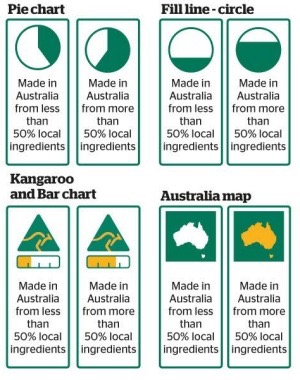
34 sickened: Proposed new Australian food labelling laws released following Hepatitis A outbreak ...
Grass-Fed, Grain-Fed Or Organic? Confusing Beef Labels Explained Grass-fed or pasture-raised. Beef that has been pasture-fed. It is said to have intense beef flavour and firm texture. Grain-fed or feedlot beef. Cattle are fed a high protein, grain-based diet to ...

Kilojoules | healthdirect By law, food labels must list the kilojoules in 100g (or 100mL) of a product and in some states and territories, certain food retailers are required to display the kilojoule content of their food and drinks at point of sale. Some also include the kilojoules in a ‘serving’. Be aware that what the manufacturers say is a serving might be different from what you eat. The number of kilojoules ...

What Food Labels In Australia Should Actually Tell Us
How to read an Australian wine label - Wine Selectors Front of the label Generally a front label will include the following: Producer's company name Brand name Geographical indication/region Prescribed name of grape variety or blend Vintage Volume statement. Trophy or medal logo if it has any - awarded at Wine Shows, Trophy is the highest award.

Guideline Daily Amount - Wikipedia A modified version of the GDA system was adopted by the Australian food and beverage industry in 2006 and called the 'Daily Intake Guide'. [2] [3] In 2009 the original GDA system analysis as adopted as an industry standard in the European Union and in 2012 a variant was adopted in the US and called 'Facts Up Front'.
36 American Gold Label Meat - Labels 2021
Differences between EU and US nutrition labels go far beyond ounces and ... The US. In the US, the Food and Drug Administration (FDA) is responsible for labeling. The agency's rules for what must be included on a packaged product's label; what can, under certain ...

Australia's getting new country of origin food labels - here's what they look like | Business ...
Guideline Daily Amount - Wikipedia A Guideline Daily Amount (GDA) is a nutrition facts label that originally began in 1998 as a collaboration between the UK government, the food industry and consumer organizations. The process was overseen by the Institute of Grocery Distribution (IGD). To help consumers make sense of the nutrition information provided on food labels, they translate science into …
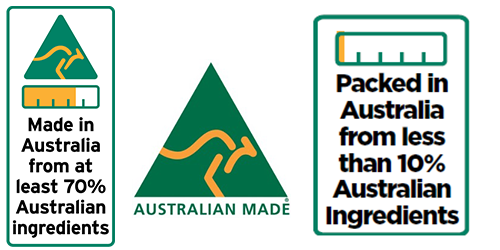
Protecting - Made in Australia – changes to food label requirements now mandatory
PDF how to understand food labels - Eat For Health Not all labels include fibre. Choose breads and cereals with Sodium 3g or more per serve Nutrition Information Servings per package - 16 Serving size - 30g (2/3 cup) Per serve Per 100g Energy 432kJ 1441kJ Protein 2.8g 9.3g Fat Total 0.4g 1.2g Saturated 0.1g 0.3g Carbohydrate Total 18.9g 62.9g Sugars 3.5g 11.8g Fibre 6.4g 21.2g 65mg 215mg

Daylesford Community Food Garden
Average Grocery Bill | Australian Living Costs – Canstar Blue 04.08.2021 · This table shows the average weekly grocery bill across Australian states, based on a Canstar Blue survey of more than 2,600 households (of all sizes). State : Average weekly grocery bill: Tasmania: $135: Victoria: $147: South Australia: $149: Queensland: $152: New South Wales: $160: Western Australia: $161: Northern Territory: $173: Source: Canstar Blue …
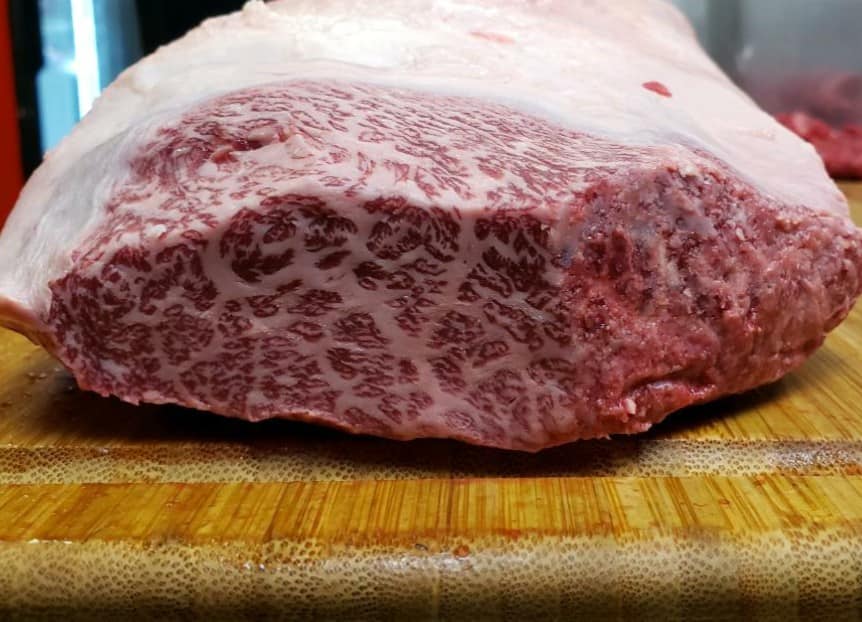
36 American Gold Label Meat - Labels 2021
Food labels explained | BHF Food labels explained Learn how to understand front-of-pack food labels, and how they can help you make heart-healthy choices more easily. When the Government recommended a front-of-pack food labelling system to all food retailers and manufacturers, we were thrilled that our campaigning efforts had paid off. The decision was announced in June ...

Australian Food Labels - Food Ideas
PDF Food labels explained Food labels explained Food labels carry useful information to help you make choices about food. The food label will tell you if the food contains an additive that you may want to avoid. ... Under labelling laws introduced in Australia in 2003, virtually all manufactured foods must carry an NIP. There are exceptions to the labelling requirements ...

Mostly Random Photos, eh?: Primanti Brothers sandwich, Pittsburgh
Iconic Australian Food | 17 Australian Foods You Should Try Barramundi is the Aboriginal name for this type of sea-bass found in Australia and the Indo-Pacific. Barramundi literally translates as "large-scaled silver fish". You have to try this fish, it's very popular for good reason - it's delicious! Barramundi by flickr 15. Lamingtons If you like coconut you'll love this very Aussie food - the Lamington.

Australia's getting new country of origin food labels - here's what they look like | Business ...
Use-by and best-before dates - Food Standards The only food that can have a different date mark on it is bread, which can be labelled with a baked-on or baked-for date if its shelf life is less than seven days. Foods that have a shelf life of two years or longer, e.g. some canned foods, do not need to be labelled with a best-before date.
Australia's new country of origin food labelling system announced | CHOICE
Average Grocery Bill | Australian Living Costs – Canstar Blue Aug 04, 2021 · This equates to about $612 a month or $7,344 a year. The average weekly spend for larger households of five or more people is roughly $255, with the majority of this spent on staple or everyday food items. Here’s what most Aussies buy in their weekly food, as found in our survey: Bakery items (i.e. bread): 63%

Understanding Food Labels & Dietary Guidelines II - Teleskola
How to Read a Food Label - WebMD A serving of a food labeled "reduced" must have 25% less of the ingredient (such as fat) than a serving of the regular version. One serving of a "light" food must have 50% less fat or 1/3 fewer ...
_RGB_HR.jpg)
PRISM: August 2014
Healthy eating for children | healthdirect try out new foods and show your children where food comes from; let them help you buy food from the shops; cook and try new recipes together; don't keep junk food in the house; keep a bowl of fruit handy for a snack; wash your hands and make sure food is prepared and stored safely; Foods to limit. Some foods are not essential in children's ...
Post a Comment for "40 australian food labels explained"